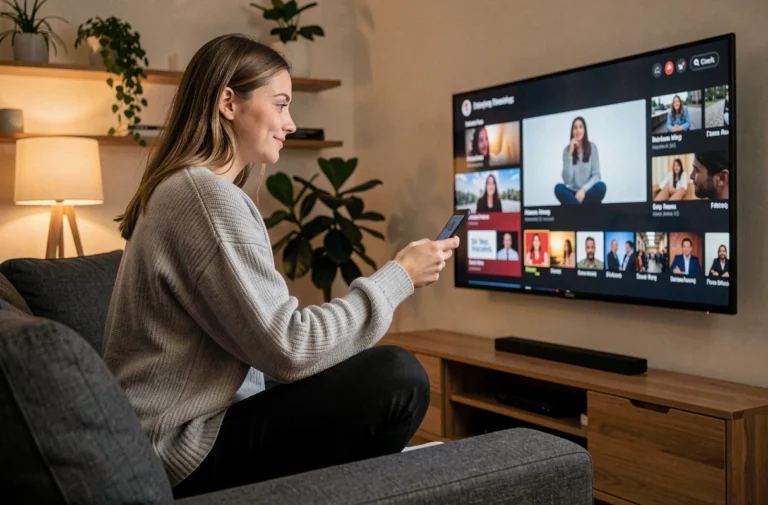
The global release of new smartphones connected to artificial intelligence now exceeds the traditional pace of annual cycles. Some local regulations impose unprecedented constraints on data collection, while major platforms accelerate the integration of generative tools into their services.
Manufacturers are now choosing to link connected devices, electric mobility, and software, disrupting daily digital habits. It’s impossible to overlook the rise of new connectivity standards, while start-ups sniff out opportunities where giants stumble, imposing their vision of innovation.
Overview of the major trends shaping the high-tech sector
Artificial intelligence is no longer just a lab topic: it shapes content creation, increasingly automates tasks, and processes volumes of data that were once inaccessible. French companies are adopting these technologies at high speed: according to INSEE, the digital sector in France is experiencing growth of 8.2% between 2024 and 2026. Thanks to machine learning, anticipating consumer desires is becoming the norm, while behind the scenes, cybersecurity stands as a true shield against the mass of exchanged information. Investments in this field have increased by 25% in just two years.
In European households, 65% are equipped with at least one connected device. The Internet of Things (IoT) flows through both factories and apartments. On the Industry 4.0 side, IoT optimizes production, reduces breakdowns, and facilitates predictive maintenance. 5G has transformed mobile connectivity, accelerating the dissemination of all high-tech news and the circulation of multimedia content.
Environmental concerns now weigh on every innovation. Industry players rely on green technologies, deploy eco-energy data centers, and design low-energy devices to structure their development. Energy efficiency is progressing, and the topic occupies an increasingly prominent place in specialized media: the share of articles dedicated to this theme has doubled in French-speaking webzines since 2025. The CNIL multiplies reports on data protection, while the Digital Solidarity initiative fights against the digital divide, with 9% of French people still feeling helpless in the face of technological acceleration.
To keep up with technological trends, monitoring is organized: specialized media such as Neo News, a high-tech webzine reference, play a key role in disseminating news and mapping the digital ecosystem.
What recent innovations are generating the most interest in 2024?
In 2024, augmented reality and virtual reality are no longer reserved for video games: they are entering training, commerce, and healthcare, changing the game in areas as varied as medicine and retail. The next wave, 6G, is on the horizon, promising high-fidelity telepresence and unprecedented uses in industry or telemedicine. On the housing side, smart homes are being integrated into 72% of new constructions, with intelligent management of lighting, access, and energy.
AI-assisted remote work is radically transforming the daily lives of French executives, who gain an average of six hours per week thanks to automation and intelligent agenda management. The cloud is becoming essential for document management, security of exchanges, and real-time alerts. In healthcare, 28% of patients already benefit from remote monitoring via connected devices, enhancing prevention and the speed of interventions.
Technological monitoring revolves around several channels: high-tech news is discussed through tech influencers, newsletters, and collaborative forums like Discord. Innovations are debated, tested, and confronted with real use. Connected devices are becoming ubiquitous, both in private and professional spheres, reinventing digital daily life.

New flagship products: highlights, limitations, and essential comparisons
In the high-tech market, new products spark interest and constantly push boundaries. Connected homes are rising to the top of trends, offering smart lighting, automated security, and remotely controllable appliances. Centralized control is appealing for its simplicity and the promise of more precise energy management. However, the issue of cybersecurity looms large: more connected devices mean more potential vulnerabilities and increased exposure to ransomware, hence the need to strengthen cybersecurity.
Industry giants are competing to offer innovations, but the question of energy efficiency keeps resurfacing in every high-tech comparison. By 2025, the presence of low-energy products has become a standard in buying guides, driven by committed webzines like Tech-Éthique or NeoGreenIT. These platforms scrutinize carbon footprints, the use of recyclable materials, and the transparency of production chains.
Here are the main strengths and limitations to keep in mind:
- Strengths: advanced automation, energy savings, enriched user experience.
- Limitations: increased risks to personal data, sometimes limited compatibility between different ecosystems, high entry cost for premium equipment.
Artificial intelligence integrated into smartphones and tablets enables advanced personalization, anticipation of needs, and easier access to information. Collaborative monitoring and feedback on specialized forums provide food for thought before purchasing, in a market that is increasingly segmented and sophisticated. The boundary between innovation and daily use is blurring, and digital technology is infiltrating everywhere, more subtle and demanding than ever.