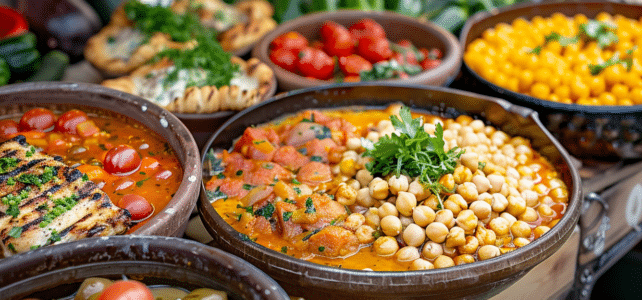
Tunisia, rich in its history and traditions, offers an authentic cuisine that never ceases to surprise. By exploring its markets and visiting its homes, one discovers dishes generous in protein and fiber, perfect for a balanced diet. Couscous with chickpeas, for example, subtly blends grains and legumes, providing a nutritious and tasty feast.
Tunisian tables are also filled with dishes like chakchouka, a delight made with peppers, tomatoes, onions, and eggs, which skillfully combines healthy and filling ingredients. Visitors, just like locals, can immerse themselves in this palette of flavors and nutritional benefits.
Traditional Dishes Rich in Protein and Fiber
Culinary exploration in Tunisia leads us to fascinating discoveries, particularly within traditional dishes rich in protein and fiber. Among these treasures, couscous stands out for its versatility and nutritional benefits. A national dish, it is prepared with steamed wheat semolina, often accompanied by seasonal vegetables and meat, all enhanced by a blend of spices.
Lablabi, a spicy soup made from chickpeas, proves to be an essential ally for cool days. Served with stale bread, this soup is enriched with garlic, cumin, and hard-boiled egg, offering a perfect combination of flavors and essential nutrients.
A Range of Traditional Dishes
- Brik: This popular snack, enjoyed as an appetizer or quick snack, is made of filo pastry stuffed with egg, tuna, and capers, then fried.
- Makroud: A cake made from semolina, dates, or figs, often coated in honey, typical of celebrations.
- Tajine: A slow-cooked stew in a clay dish, made with meat, vegetables, and spices.
Each dish, with its specific ingredients, brings a diversity of vitamins and minerals. The brik, for example, is a quick source of energy thanks to its composition rich in animal and plant proteins. The makroud, on the other hand, offers natural sugars from dates and figs, perfect for special occasions.
A Culinary Heritage to Preserve
The richness of Tunisian cuisine is not limited to its flavors. It also represents an intangible cultural heritage, recognized for its balance and nutritional benefits. Each meal thus becomes a celebration of diversity and tradition, a tribute to the history and culture of this region.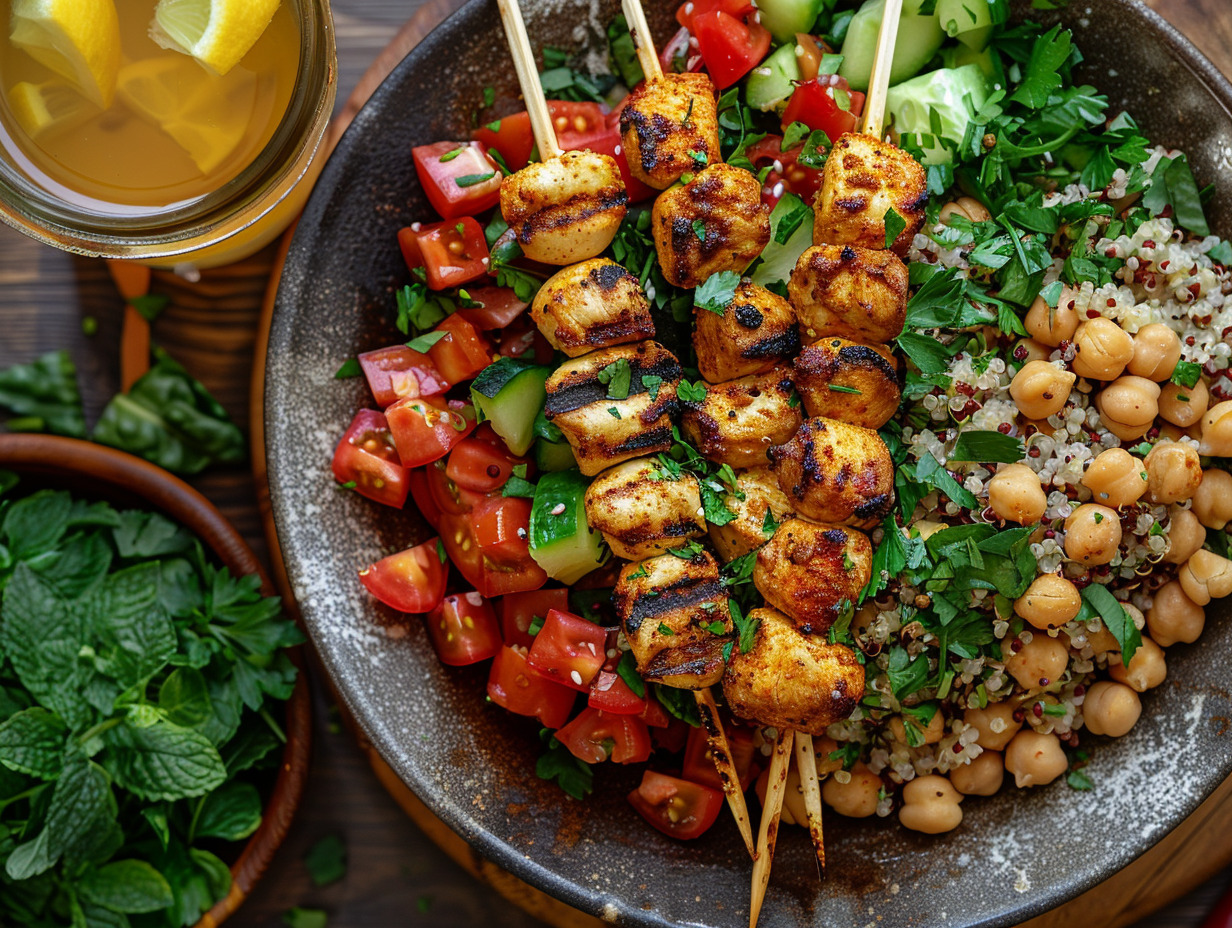
Local Ingredients and Their Nutritional Benefits
Culinary exploration in Tunisia would not be complete without mentioning local ingredients, true pillars of this cuisine rich in flavors and nutritional benefits. Among them, harissa holds a prominent place. This iconic condiment, made from red peppers, garlic, coriander, and caraway, is not only an essential seasoning but also a valuable source of vitamins and antioxidants.
The region of Nabeul is distinguished by the production of most of the peppers used for harissa. The quality of the soils and the favorable climate contribute significantly. I. Attig, president of the Tunisian Association of Intangible Cultural Heritage and harissa producer, emphasizes the importance of preserving these traditional production methods. Harissa, integrated into the Slow Food organization network, reflects the local commitment to sustainable and tradition-respecting food.
| Ingredient | Nutritional Benefits |
|---|---|
| Harissa | Rich in vitamins A, C, and E, antioxidants |
| Chickpeas (Lablabi) | Plant proteins, fiber, iron |
| Wheat semolina (Couscous) | Complex carbohydrates, fiber |
| Dates (Makroud) | Quick energy, minerals, fiber |
Also consider chickpeas, a central element of Lablabi, rich in plant proteins and fiber. This often-overlooked ingredient plays a fundamental role in a balanced diet, offering a healthy alternative to animal proteins. The wheat semolina used for couscous provides complex carbohydrates and fiber, essential for sustained energy and good digestion.
Each ingredient, through its richness and diversity, contributes to the health and well-being of consumers. The choice of local and natural products, such as harissa and chickpeas, enhances the nutritional value of traditional Tunisian dishes.