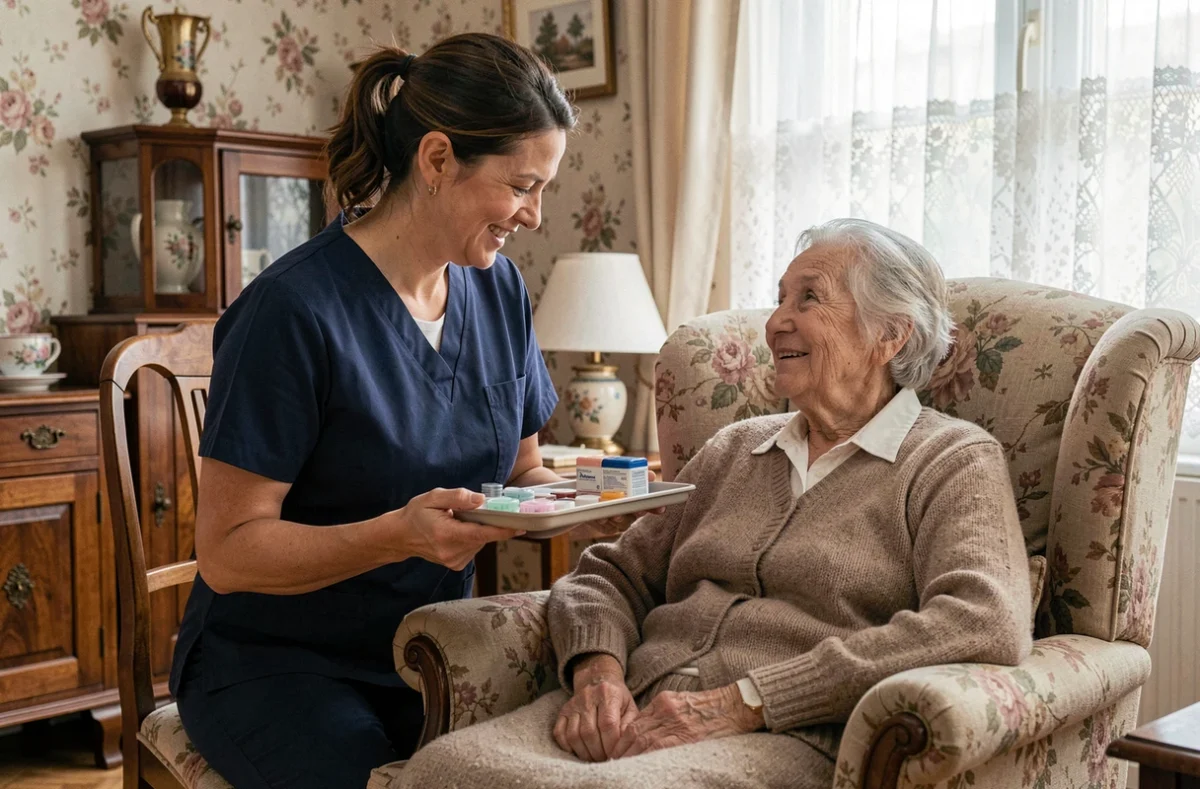
When a local ADMR association informs its beneficiaries that the hourly rate is increasing by several euros, the first reaction on the ground is rarely financial. People first want to know how many hours of assistance they will lose in the APA plan, and whether their usual caregiver will still be able to come. Since 2026, the pricing mechanism for home care has changed fundamentally with the introduction of a national base rate, and the repercussions are felt well beyond budget lines.
National Base Rate APA: The Mechanism that Redistributes the Cards
Before 2026, each departmental council freely set the rate it was willing to finance for an hour of home care in a service mode. The differences from one department to another could reach several euros, creating marked territorial inequalities.
Since January 1, 2026, a national floor set at 25 euros per hour applies to hours financed by the APA or the PCH in service mode. Departments can add a quality allocation, up to 3 euros depending on the territories, but can no longer go below this threshold.
For ADMR associations, this floor secures part of the funding. In return, it tightens departmental budgets. A department that previously paid less than 25 euros per hour must now absorb the difference, which may lead it to reduce the number of hours allocated in aid plans rather than increase its overall budget.
The increase in ADMR rates in 2026 fits into this logic: the hourly rate rises, but the volume of hours granted to each beneficiary may decrease to stay within the departmental envelope.

Salary Revaluation and Charges: Why the ADMR Rate Increases Mechanically
The minimum wage was increased by 2.41% on June 1, 2026. For an ADMR structure, the payroll represents the main expense item. When the minimum wage rises, the billed hourly rate must follow, or else it risks operating at a loss.
But the increase in the minimum wage is not the only factor. Several charges have accumulated:
- Mandatory insurance and new regulatory standards add fixed costs that structures cannot compress.
- The price increase cap set at 2% for 2026 by the decree regulating rates is deemed insufficient by Fédésap, which estimates that actual charges are rising much faster.
Concrete result: the gap between actual charges and the authorized rate is widening. Some local associations absorb the difference by reducing their margins, while others pass on the maximum legal amount to the rate charged to beneficiaries.
Out-of-Pocket Expenses for Home Care: What Changes for Beneficiaries in 2026
On the ground, it is observed that beneficiaries do not always perceive the increase through the gross hourly rate. It is the monthly out-of-pocket expenses that matter, and these depend on several combined variables.
People classified in GIR 1 to 4 benefit from the APA, which covers part of the rate. But when the hourly rate increases and the aid plan remains capped, the portion not covered by the APA automatically increases. For a beneficiary in GIR 4 with a modest plan, a few extra euros per hour can translate into several tens of euros more each month.
The 50% tax credit on personal services remains active and mitigates the bill, but it only applies the following year during the income declaration. For seniors on a tight budget, this cash flow advance poses a concrete problem.
Departmental Caps and Out-of-Pocket Expenses
Some departmental councils now publish maximum contractual rates for agreed services. This practice frames the out-of-pocket expenses, but it also limits the ability of associations to pass on their actual costs. Feedback on this point varies by department: some territories support the increase, while others slow it down.

Direct Employment vs. ADMR Service Mode: A Toughening Arbitration
Faced with rising rates in service mode, some families are considering direct employment (or negotiated contracts) to reduce the hourly cost. The gross rate is generally lower since the associative intermediary is removed.
This comparison has its limits. In direct employment, the family becomes the employer. They manage payroll, vacations, replacements in case of absence, and assume legal responsibility. For an isolated elderly person or a caregiver already overwhelmed, the administrative management of direct employment represents a real burden that the hourly rate does not reflect.
Employees in direct employment do not benefit from the same increases as those in the associative sector, widening the attractiveness gap between the two modes. Finding and keeping a home caregiver in direct employment becomes more difficult in areas where associations offer better conditions.
Continuity of Home Care: The Real Risk Behind the Rate Increase
Fédésap describes the situation as “untenable” for home care structures. Beyond the union vocabulary, the operational risk is real. When a local association can no longer balance its accounts, it reduces its intervention slots, refuses new beneficiaries, or closes rural branches.
For the seniors affected, the consequence is not abstract: it is a canceled weekend assistance, a shortened bathing time, or a longer wait for care. The increase in rates without a proportional revaluation of public funding jeopardizes access to the service itself.
The question that arises for the end of 2026 is not so much whether ADMR rates will increase again, but whether departments and the State will adjust the APA and PCH envelopes so that this increase does not result in an actual reduction in home support hours.