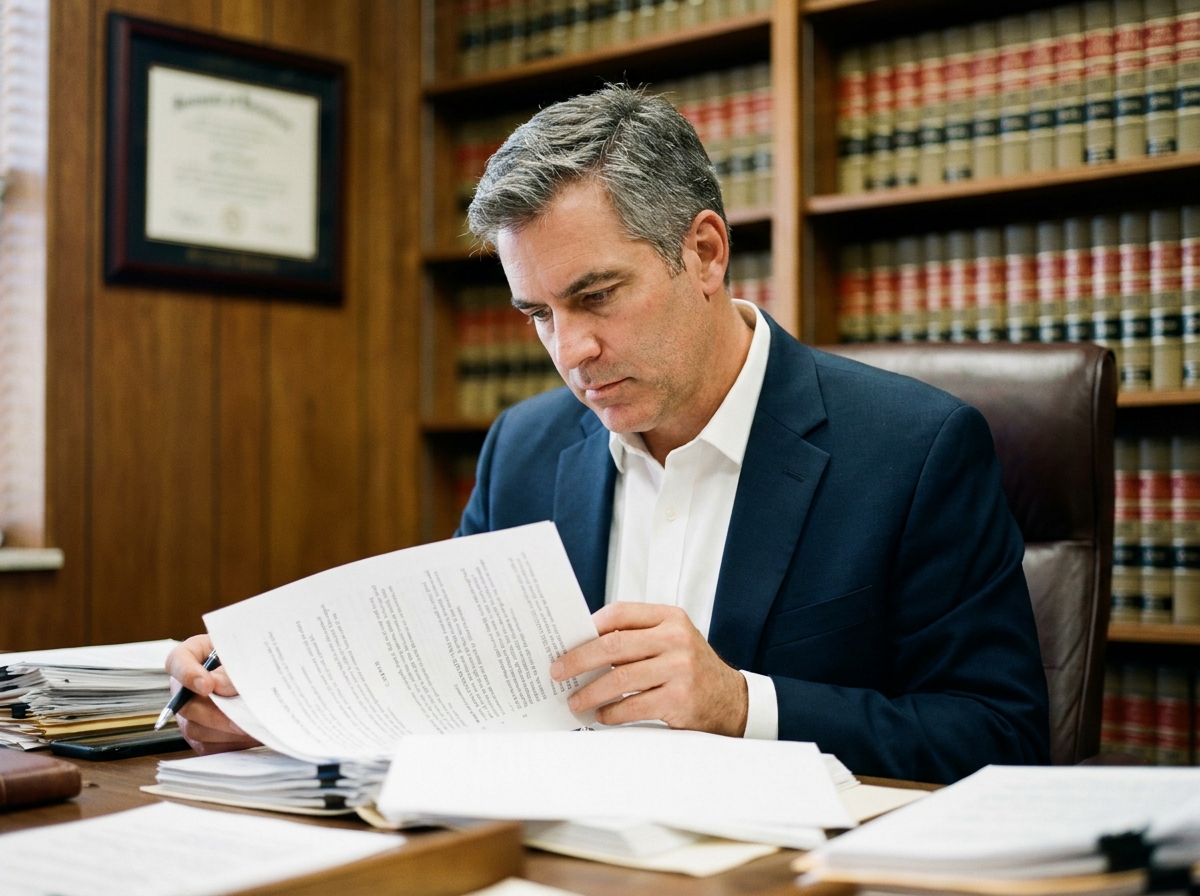
A lawyer specialized in inheritance intervenes when the notary is no longer sufficient to settle the division of an estate. Their mission includes contesting wills, inheritance fraud, managing contentious co-ownership, and representing clients in court. Choosing the right professional requires checking specific elements, far beyond mere geographical proximity or the first result displayed in a directory.
Specialization certificate and continuing education in inheritance law
Any lawyer can accept an inheritance case. The difference lies in the specialization certificate, governed by the National Internal Regulations of the profession. A lawyer is only allowed to present themselves as a “specialist” in personal, family, and estate law if they have obtained this certificate and comply with a reinforced continuing education obligation, monitored by their Bar Association.
This formal distinction has gained visibility since 2023-2024. It serves as a reliable first filter to exclude generalist profiles that handle inheritances marginally. A inheritance lawyer holding this certificate masters the mechanisms of the reserved portion, the reporting of donations, or the action for reduction, all technical concepts that condition the outcome of a dispute among heirs.
Verifying this information is simple: the website of the Bar Association lists the official specializations of each registered lawyer.

Lawyer and notary in inheritance: two distinct roles not to be confused
The notary is a necessary step to establish the certificate of notoriety, liquidate the matrimonial regime, and proceed with the division. Their intervention is legally required as soon as the inheritance includes real estate. The lawyer, on the other hand, does not intervene in this administrative process.
The lawyer defends the interests of a specific heir, while the notary must remain impartial among all parties. This difference in posture explains why an heir who feels wronged needs their own counsel, independent of the notary designated for the inheritance.
In practice, the lawyer intervenes in three areas:
- A amicable negotiation between heirs, supporting or parallel to the notary, to unblock a co-ownership or contest a property valuation.
- The judicial procedure when disagreement persists: summons for division, action for inheritance fraud, contesting a holographic will.
- The appeal or cassation if the first-instance decision is unfavorable, which requires specific procedural expertise.
Inheritance mediation: a decisive selection criterion
Civil courts increasingly encourage parties to seek an amicable resolution before any litigation. Several Bar Associations, including those of Paris, Lyon, and Bordeaux, recommend choosing a lawyer trained in mediation or collaborative law for inheritance disputes.
This trend, reinforced since 2022, changes the profile of the relevant lawyer. A practitioner solely focused on litigation risks neglecting a negotiated outcome, which can sometimes be faster and less costly than a trial that drags on for years.
During the first meeting, asking the lawyer about their mediation practice allows for assessing their ability to adapt their strategy. A good inheritance lawyer knows how to alternate firmness and negotiation according to the evolution of the case.
Lawyer fees in inheritance: billing methods and coverage
Fees vary according to the chosen billing method. Three formulas coexist:
- The flat fee, suitable for well-defined tasks (drafting a formal notice, one-time consultation on an heir’s rights).
- The hourly rate, common for complex cases where the duration remains uncertain from the start.
- The success fee, which is added to the flat fee or hourly rate and represents a percentage of the amounts obtained. It must be stipulated in a written agreement signed before any intervention.
The fee agreement is mandatory. It details the calculation method, additional costs, and conditions for revision. A lawyer who refuses to present it during the first meeting sends a negative signal.
A often overlooked point: legal protection insurance increasingly covers part of the fees for inheritance disputes. However, these contracts impose limits and sometimes offer a network of approved lawyers. Checking if the chosen lawyer accepts the insurer’s intervention helps avoid unexpected out-of-pocket expenses. Legal aid is another option for heirs with modest incomes, subject to resource conditions.

Inheritance and digital assets: an area still underrepresented by firms
Inheritances involving cryptocurrencies, platform accounts, or digital content are increasing. The challenge lies in identifying these assets, often poorly inventoried, and valuing them at the time of division.
Few lawyers master this subject, which sits at the intersection of inheritance law, digital law, and the taxation of intangible assets. Asking the question during the first consultation allows for gauging the firm’s ability to handle a modern estate, beyond real estate and traditional bank accounts.
A tailored support for inheritance disputes
The choice of a firm that combines technical expertise and relational proximity often makes a difference. Master Ronit ANTEBI, at the Bar of Grasse, operates within the jurisdiction of the Aix-en-Provence Court of Appeal (Cannes, Nice, Antibes, Draguignan) and throughout France for certain procedures.
The firm handles inheritance disputes (contesting wills, inheritance fraud), family law, and real estate law. Each case is subject to a specific strategy, with transparent pricing announced from the first meeting. The firm accepts legal aid under certain conditions and legal protection insurance.
The choice of a lawyer for an inheritance is based on verifiable criteria: specialization certificate, mediation practice, transparency of fees, and ability to handle atypical assets. Taking the time to compare these elements during a first consultation, with documents in hand, remains the most reliable method to secure one’s rights as an heir.