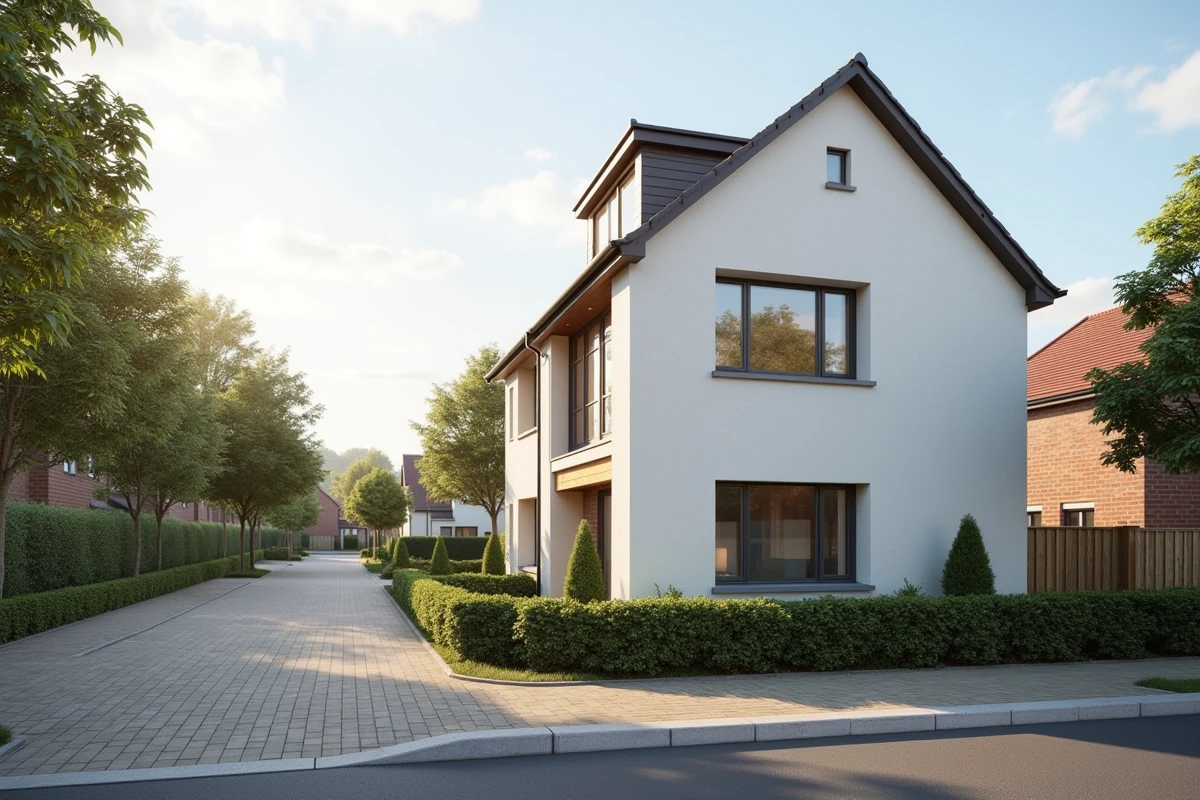
A type 5 house, or T5, refers to a dwelling composed of five main rooms. Not five bedrooms, not five spaces in total: five living rooms. The kitchen, bathroom, and toilets do not count in this tally. This distinction often traps buyers who discover, after a visit, that the property does not match what they had imagined when reading the listing.
Main rooms of a T5: what the count really includes
The classification is based on main rooms in the real estate sense, meaning spaces intended for living or sleeping. A living room and four bedrooms: this is the most common configuration. In practice, one of these rooms can serve as an office, playroom, or library without changing the classification.
Have you noticed the mention “T5 bis” on some listings? It indicates that one main room is large enough to be functionally divided into two distinct spaces. A spacious living room of over thirty square meters, for example, can justify this designation. This detail alters the perception of the property and complicates comparisons between two T5s listed at the same price.
To delve deeper into these classification subtleties, a guide on the type 5 house details the exact criteria that define each category of housing.
Service rooms (kitchen, bathroom, laundry room, hallways) are excluded from the count, regardless of their size. An open kitchen to the living room does not create an additional room. Only closed rooms of at least 9 m² count in most professional uses.
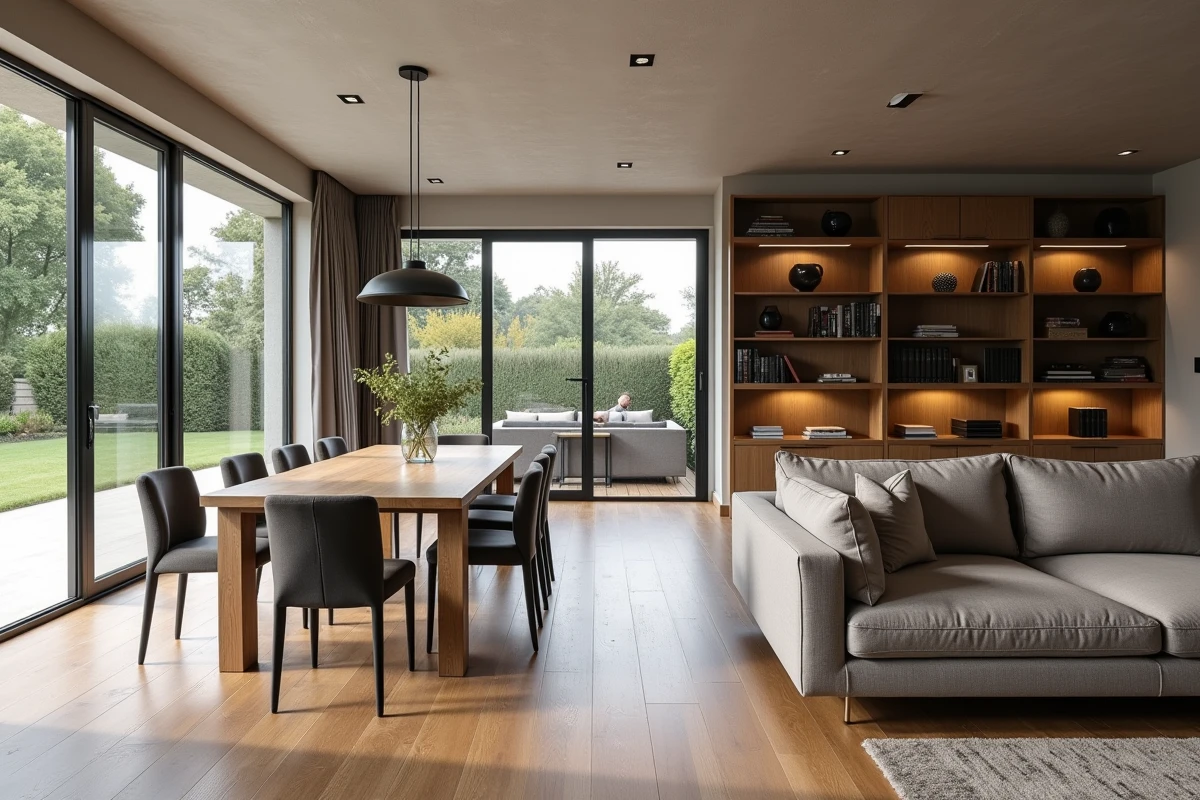
T5 house and usage logic: beyond the four-bedroom layout
The “living room plus four bedrooms” layout remains the most frequent, but it no longer reflects the reality of many properties on the market. Recent listings show T5s configured with a master suite, a dedicated home office, or a large through-living space.
This versatility of rooms changes the way a purchase is evaluated. Why this choice? Because a family with two children does not have the same needs as a couple working from home. The configuration of the rooms matters more than their number.
Let’s take a concrete example. A single-story T5 with four bedrooms aligned along a hallway suits a large family. The same number of rooms spread over two levels, with a master suite upstairs and an office on the ground floor, caters to a very different profile. The total area may be identical, but the comfort experienced will be distinct.
Common configurations on the market
- Double living room, three bedrooms, and an office: prioritizes common living space and home working
- Four bedrooms with a master suite (bedroom, shower room, dressing room): suitable for families with young children
- Three bedrooms, a playroom, and a large living room open to the kitchen: optimizes daily conviviality
Before visiting, identify your usage logic. This prevents falling in love with a layout that won’t work in daily life.
Budget for purchasing a 5-room house: the items that listings do not show
The listed price of a T5 house represents only a fraction of the actual budget. Notary fees, potential renovation work, and ongoing charges can significantly increase the total cost.
Buying an older property almost always involves renovations. An old five-room house may require electrical upgrades, roof replacement, or thermal insulation. These items often represent an amount comparable to several months of mortgage payments.
Here are a few points to check before making a purchase offer:
- The state of the energy performance diagnosis (DPE), which affects the possibility of renting the property and influences its resale value
- The compliance of sanitation, especially for individual houses in rural areas
- The age of windows and the boiler, which are costly replacement items in the short term
- The size of the land and local urban planning regulations, which determine future extension possibilities

Negotiating the price of a type 5 house
Real estate negotiation relies on factual elements. An unfavorable DPE, identified renovation work during the visit, or a property that has been on the market for several months are concrete leverage points. A well-argued purchase offer with renovation quotes carries more weight than a simple request for a discount.
The purchase project benefits from being prepared in advance with a broker or a banking advisor. Knowing your borrowing capacity precisely allows you to target realistic properties and avoid unnecessary visits.
Single-story or multi-story T5 house: concrete choice criteria
The single-story option is appealing for accessibility and ease of maintenance. Having all rooms on one level simplifies daily life, especially with young children or people with reduced mobility. On the other hand, a single-story house requires a larger plot for equivalent living space, which increases land costs.
The multi-story house allows for separation between day and night spaces. It often offers better privacy and can be built on smaller plots. Construction is generally cheaper per square meter due to a reduced footprint.
The choice depends on the available land, overall budget, and lifestyle. A family planning to age in their home should consider accessibility from the start rather than contemplating costly adaptation work in fifteen years.
The type 5 house remains one of the most sought-after formats by French families. Its versatility allows it to adapt to very different life projects, provided one looks beyond the simple counting of rooms to examine the actual configuration, the condition of the building, and the total cost of the project.