The choice of flooring materials determines the durability and thermal comfort of a garden much more than the furniture or vegetation. An outdoor landscaping project that neglects the permeability of surfaces or water management finds itself exposed to summer watering restrictions and heat island effects, even on a modest plot.
Permeable surfaces and thermal management of outdoor soil
Traditional mineral surfaces (concrete slabs, compacted gravel, artificial grass) store heat and accelerate runoff. Following recent heatwave episodes, urban planning services recommend reducing them in favor of permeable surfaces: permeable pavers, wood chips, ground cover plants.
Permeable pavers allow water to infiltrate into the underlying soil, which recharges the shallow aquifer and limits stagnant puddles. Wood chips, on the other hand, provide thermal insulation for the root layer and slow down evaporation. A ground cover like creeping thyme or dichondra tolerates moderate foot traffic and requires no mowing or regular watering once established.
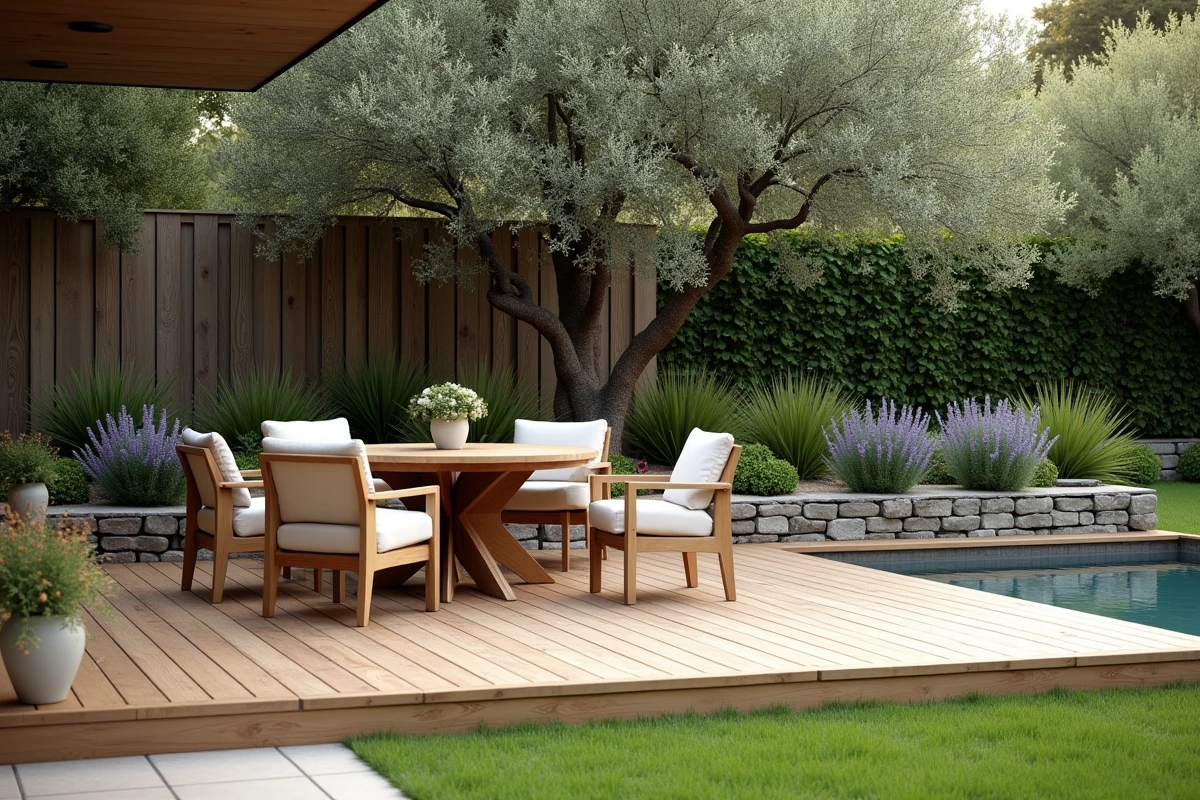
We recommend combining at least two of these solutions on the same plot. A terrace made of permeable pavers bordered by planted strips of ground cover creates a natural transition to the flowerbeds while reducing the perceived ground temperature by several degrees compared to a solid slab.
To explore Tradition Jardin’s landscaping solutions suitable for this type of configuration, compare the formats of pavers and the types of ground cover compatible with your soil.
Flowering meadows and honey-producing plants: replacing grass without losing aesthetics
Traditional grass is clearly declining among nurseries. Sales of flowering meadows and drought-resistant grass mixtures are increasing each season, driven by a dual motivation: reducing water consumption and promoting biodiversity.
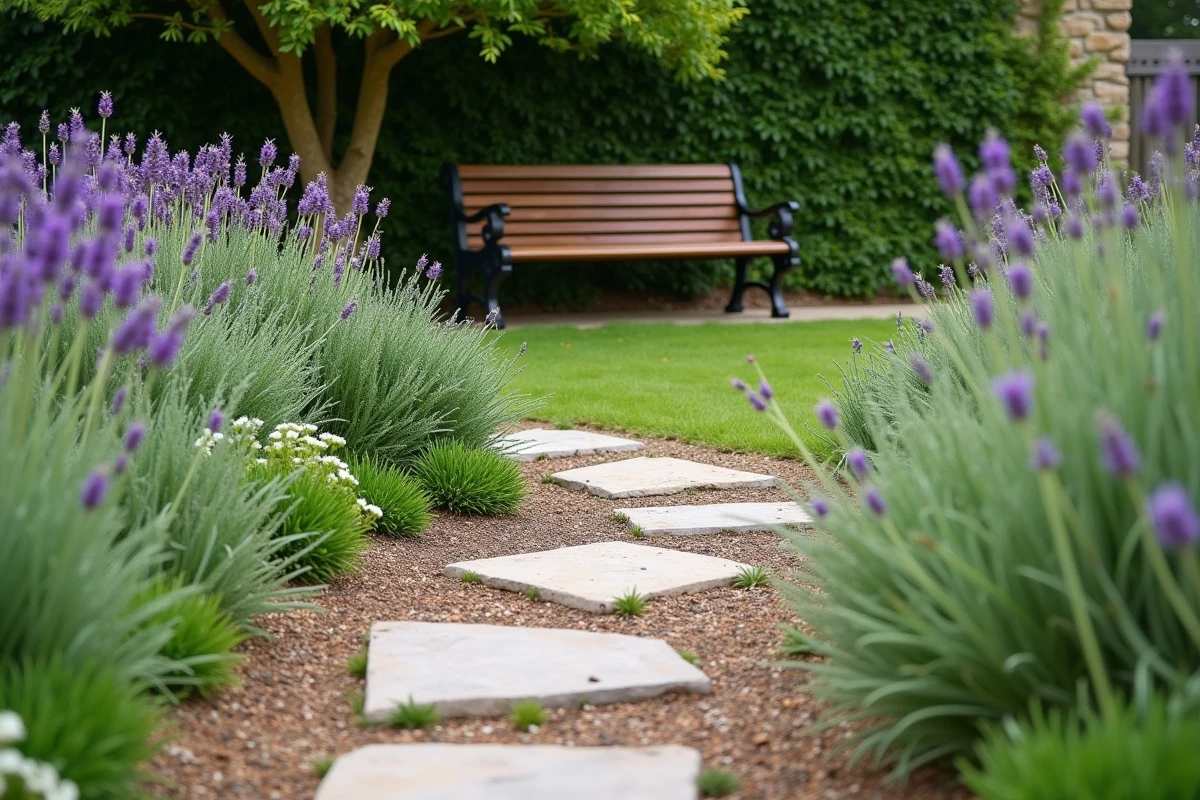
A flowering meadow seed mix suitable for your climate zone requires late mowing (once or twice a year) and no watering after the year of installation. Local honey-producing plants attract pollinators and birds, which many French metropolitan climate plans actively encourage.
Creating a mix suitable for your terrain
The success of a meadow depends on the soil pH, drainage, and sunlight. In clay soil, prioritize deep-rooted grasses (tall fescue, ryegrass) combined with hardy perennials (yarrow, centaury). In sandy soil, the mix leans towards sheep fescue and annuals like poppies or cornflowers.
- Shaded area: mix of fine grasses and white clover, which fixes nitrogen and tolerates partial shade
- Dry and sunny area: sheep fescue, meadow sage, daisy, yarrow
- Moderate traffic area: dwarf clover, creeping thyme, daisy, which can withstand light foot traffic
A well-composed meadow requires less maintenance than a traditional lawn and offers staggered flowering from spring to autumn.
Rainwater harvesting and regulatory constraints on watering
Recent drought prefectural orders have tightened restrictions on garden watering and the filling of private pools. Several regions prohibit certain watering systems during alert periods, and official incentives to install rainwater collectors are multiplying.
A buried rainwater collector with good capacity, connected to downspouts, covers a large part of the watering needs of an ornamental garden between April and September. The investment pays off even faster as summer restrictions become recurrent.
Sizing your installation according to roof area
The collecting roof area determines the recoverable volume. A medium-sized roof easily supplies a drip irrigation network for flowerbeds and a vegetable garden. Drip irrigation, by delivering water directly to the base of plants, reduces losses due to evaporation and remains permitted in most drought alert levels, unlike sprinkler irrigation.
- Above-ground tank (accessible and inexpensive): suitable for small gardens or balconies with planters
- Buried tank (higher capacity): recommended as soon as the planted area exceeds a few dozen square meters
- Upstream filtration: a leaf filter and a first flush system prevent clogging and improve the quality of stored water
Outdoor lighting and nighttime living areas
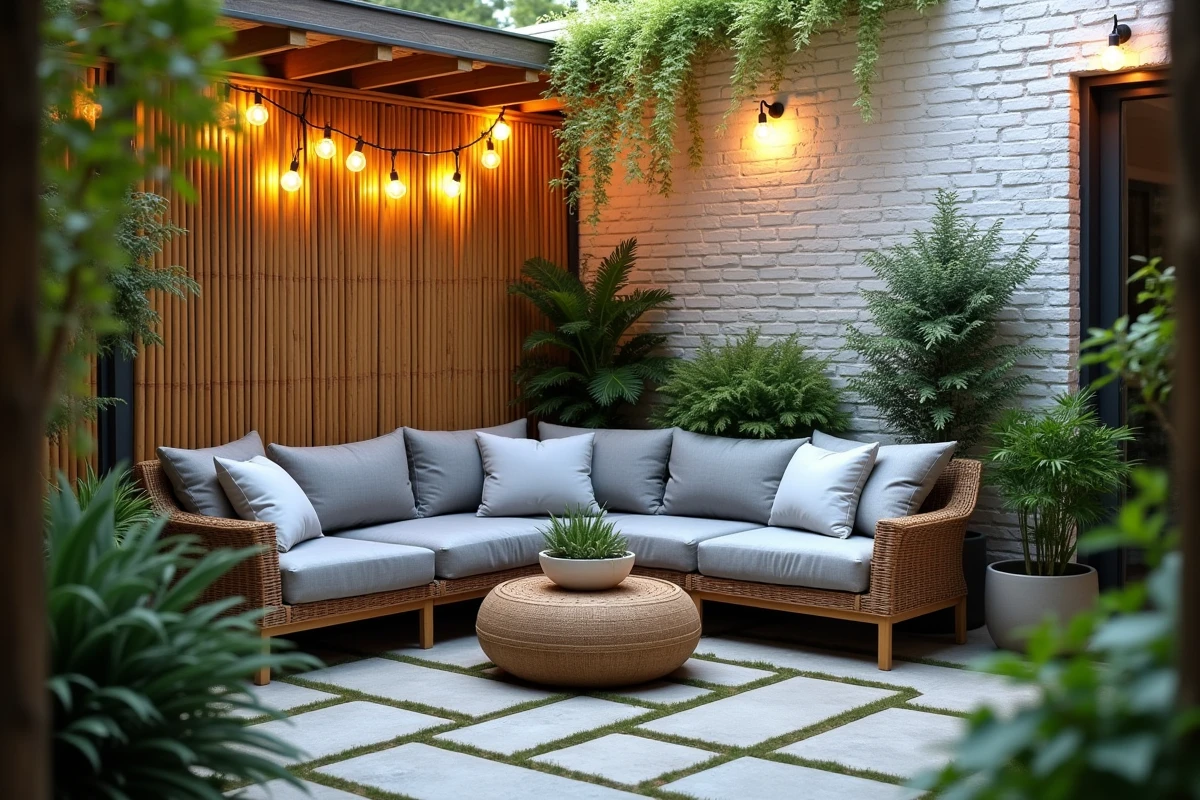
Lighting transforms a garden into a usable living space all year round. A well-thought-out lighting plan distinguishes three functions: marking (securing pathways), staging (highlighting a tree, a wall, a fountain), and functional lighting (terrace, dining area).
Low-voltage solar lights are sufficient for marking a path. For the terrace, wall-mounted or suspended lighting on a pergola offers superior visual comfort compared to string lights, with a much longer lifespan. Adjustable LED spotlights embedded at the base of trees create a spectacular upward lighting effect, provided the power is limited to avoid light pollution.
Choosing a consistent color temperature
Outdoors, a warm color temperature (around 2700 K) integrates better with natural materials (wood, stone) than a cool white. Mixing sources of different temperatures in the same visual field disrupts harmony and strains the eyes. Standardizing the color temperature throughout the garden is a simple rule that makes the difference between amateur lighting and a professional result.
Low-voltage wiring (12 V) simplifies installation and reduces risks in humid environments. Planning for technical conduits when creating flowerbeds or the terrace avoids having to dig afterward, which damages plantings and surfaces.
A sustainable outdoor design relies on technical choices made in advance: soil permeability, water autonomy, and understated lighting. These decisions condition the long-term comfort of the garden, well beyond the season following the work.