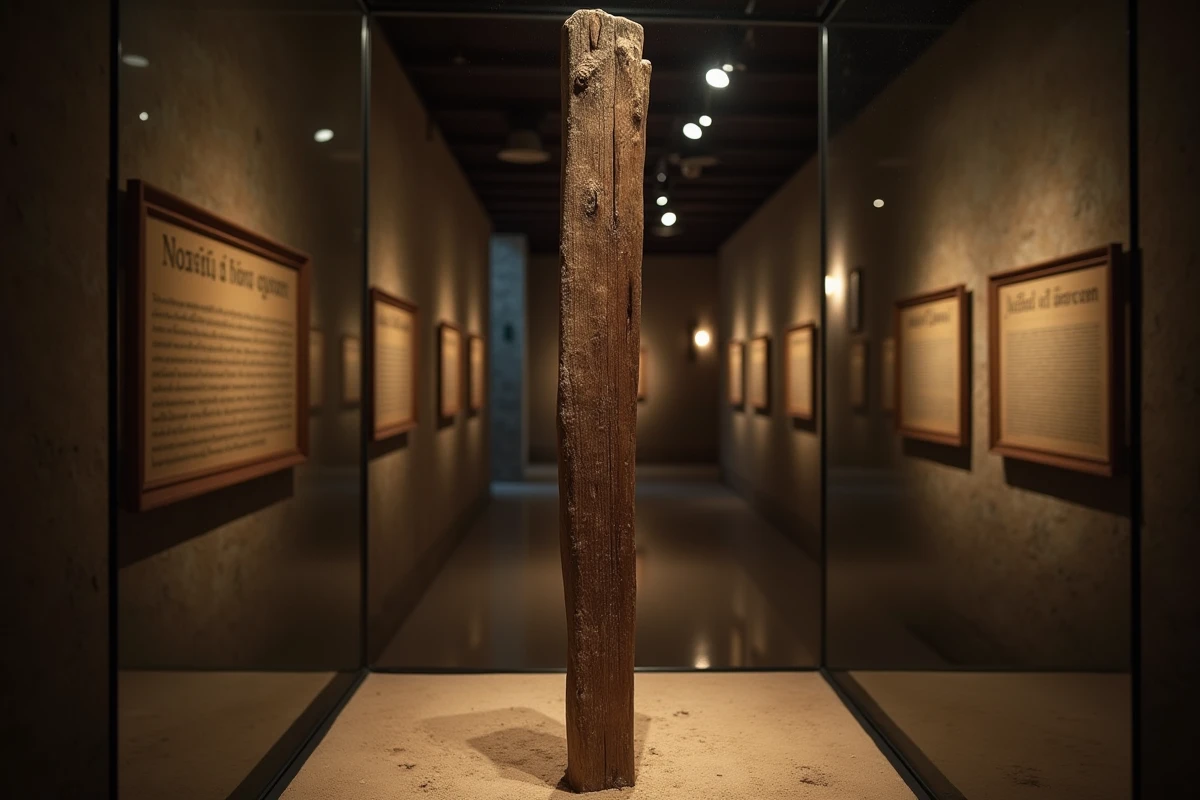
The impalement torture is among the most documented methods of execution in criminal history. Practiced across several continents and for centuries, this punishment involved driving a stake into the body of the condemned, usually through the rectum, and then raising it vertically for public agony. The stake was not an act of spontaneous cruelty: it followed a specific political logic, that of organized terror.
Mechanics of the impalement torture and the role of the executioner
The stake refers to a wooden pole, sometimes coated with grease to facilitate penetration, whose tip could be pointed or slightly rounded depending on the intent. A stake that was too sharp would kill quickly by perforating vital organs. A rounded stake, on the other hand, would separate tissues without immediately tearing them, prolonging suffering for several hours, sometimes days.
The executioner had to master the angle of insertion to avoid a too-rapid death. The stake would progress along the spine without breaking the spinal cord, which kept the condemned conscious. The body was then hoisted vertically, the weight of the victim gradually driving the stake down by gravity.
To delve deeper into the physical and historical dimensions of this practice, a detailed article discusses impalement on Comme Vous Voulez with an analysis of available sources.
The spectacular dimension was as important as the execution itself. Impaled bodies were displayed at the city gates or along roads, sometimes by the dozens. This staging transformed each execution into a political message directed at the populations and potential enemies.

Vlad the Impaler and impalement as a political weapon in Wallachia
Impalement remains inseparable from the name of Vlad III, Prince of Wallachia in the 15th century, known as Vlad Dracula and then Vlad the Impaler. Ottoman and Germanic chronicles report that he had thousands of prisoners impaled after his military campaigns. The goal went beyond simple punishment: it was to deter the Ottoman Empire from invading his territory.
Accounts describe forests of stakes erected before invading armies, a spectacle so striking that some troops reportedly turned back. These testimonies, often written by Vlad’s political adversaries, pose a reliability issue. The available data do not confirm the highest estimates of the number of victims.
From historical prince to the Dracula myth
The nickname “Dracula” (son of the Dragon, referring to his father’s Order of the Dragon) was appropriated by Bram Stoker for his 1897 novel. The literary character bears little resemblance to the Wallachian prince, but the association between Vlad and extreme cruelty has crystallized in popular culture.
Television series and film productions continue to exploit this figure. Impalement serves as a visual shorthand to signify medieval barbarism, often without historical context. The strategic prince disappears behind the bloodthirsty monster, which impoverishes the understanding of the political role of this torture.
Practice of impalement outside Europe: Ottoman Empire, Assyria, ancient penal codes
Reducing impalement to Wallachia would be a mistake. This form of torture appears in very varied geographical and chronological contexts:
- In Assyria (first millennium BCE), the bas-reliefs of Nimrud and Nineveh depict scenes of the impalement of prisoners of war, integrated into royal propaganda carved in stone.
- In the Ottoman Empire, impalement was among the punishments prescribed for certain serious crimes, alongside other corporal tortures. Its use was documented until the 18th century.
- In Western Europe, isolated cases are recorded in France and Italy, although the wheel and the pyre were more common there. The penal code of several Italian states mentioned impalement as a theoretical penalty for crimes of lèse-majesté.
This geographical diffusion indicates that the impalement torture responded to a universal logic of public terror, independent of any particular culture. Everywhere, it served the same purpose: to make punishment visible, memorable, and deterrent.
Archaeological traces and limitations of sources on the impalement torture
One of the major problems for historians lies in the scarcity of direct material evidence. The wood of the stakes has disappeared. The bones of the victims, when found, show lesions compatible with impalement but rarely unequivocal.
Written sources pose other difficulties. The medieval and ancient chronicles that describe impalement often served a propaganda purpose, either to glorify a sovereign or to demonize an enemy. Field reports from archaeologists diverge on the interpretation of skeletal remains, and distinguishing between ante-mortem and post-mortem impalement remains challenging to establish.
What artistic representations reveal
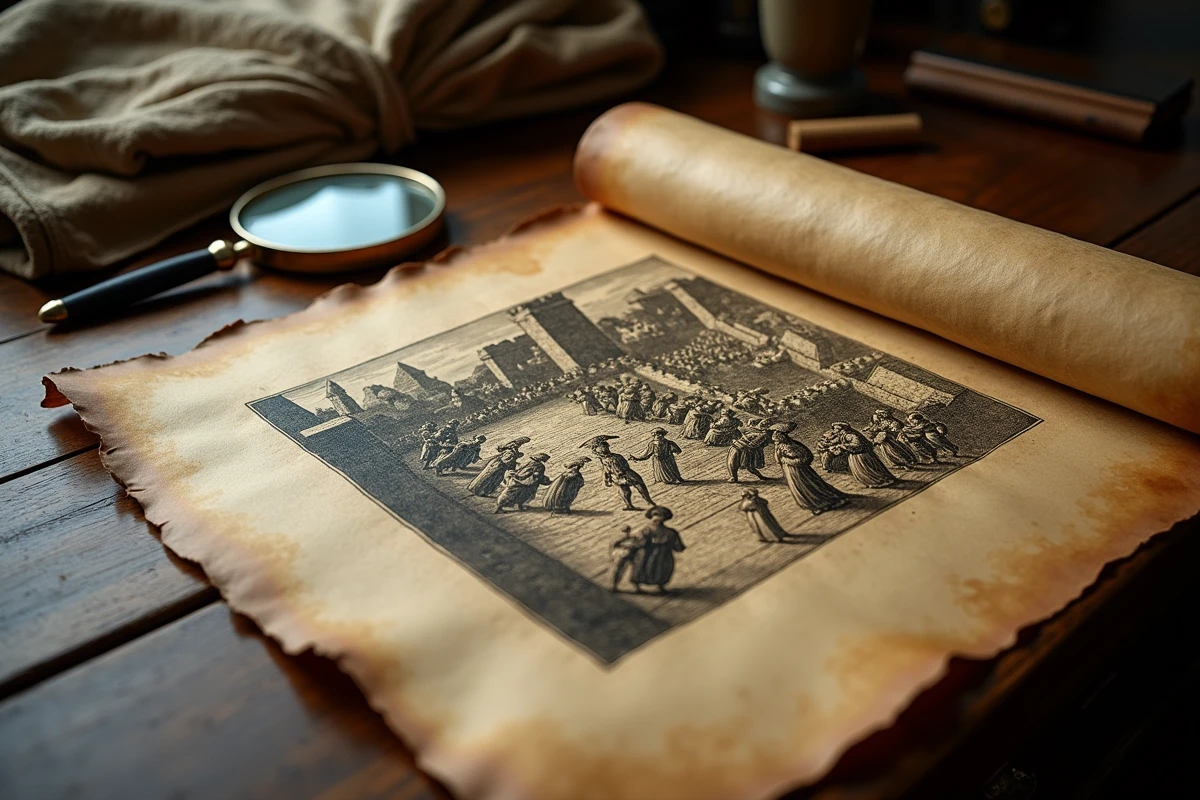
The 15th-century German engravings showing the impalements attributed to Vlad constitute an abundant iconographic source. These images circulated in the form of printed pamphlets, among the first bestsellers of the Gutenberg era. Their documentary value is real, but their anti-Wallachian propaganda dimension cannot be ignored.
From Assyrian bas-reliefs to European engravings, the representation of impalement has always served a dual purpose: to document and to impress. Historians work with this permanent ambiguity between factual source and political communication tool.
Impalement officially disappeared from penal codes during the 19th century, as European and Ottoman judicial reforms abolished corporal punishments. Its memory persists in the collective imagination as a symbol of a justice based on spectacular pain, a legacy that contemporary cultural productions regularly reactivate without always measuring the historical complexity surrounding it.