
Crossing Bolivia by local bus for twelve hours on an unpaved road, or traveling from London to Edinburgh by overnight train without stepping foot in an airport: the choice of transport shapes the journey as much as the destination. Traveling differently starts with deciding how to get around, and this decision changes everything, from the budget to the pace, including the encounters along the way.
Night Trains in Europe: Resumed Connections but Not Always Sustainable
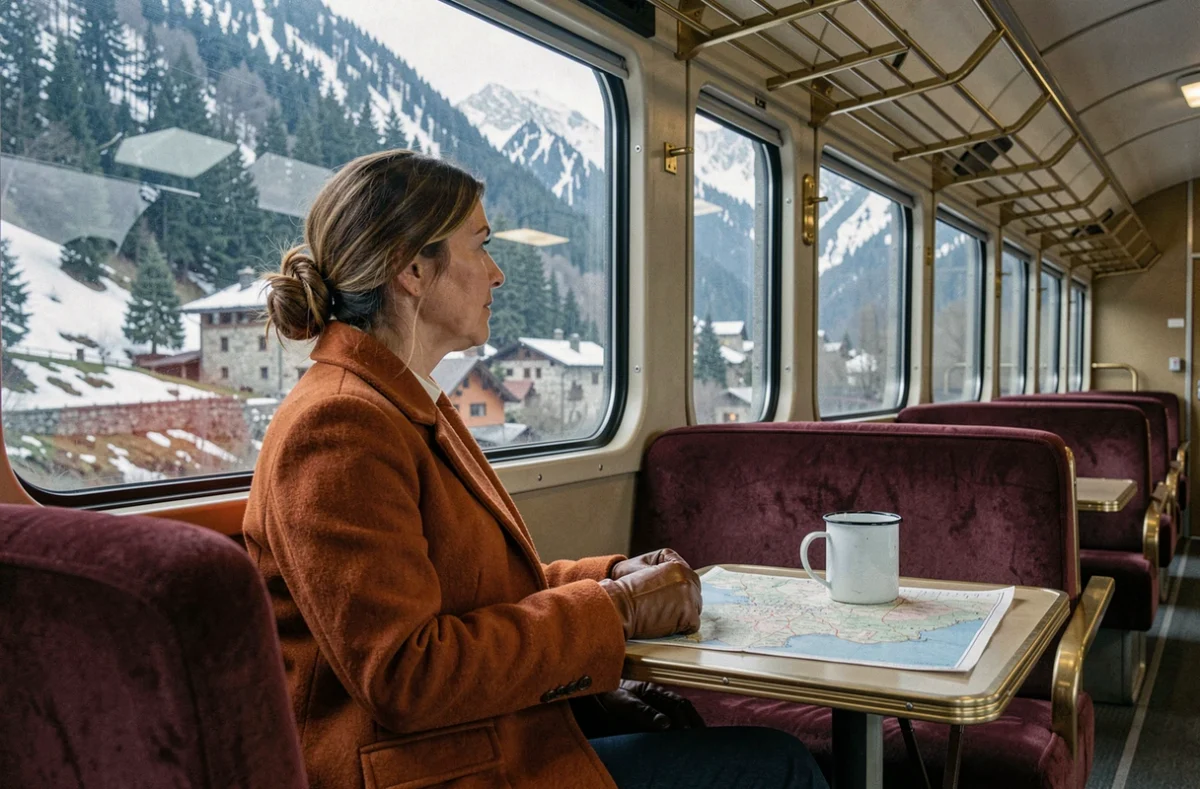
There is much talk about the return of night trains as an alternative to flying on European routes. The reality on the ground is more mixed. Private operators are indeed reviving lines, and new cross-border connections are emerging. For example, Leo Express launched a daily direct connection between Frankfurt and Przemyśl in June 2026, via several Central European cities.
The problem is that these new lines disappear when subsidies end. The Nightjet Paris-Vienna was canceled in December 2025 after the end of French financial support. Before planning an itinerary around a night train, it is advisable to check that the connection still exists at the time of departure.
The train remains the least CO2-emitting mode of transport per passenger over medium distances. For travelers looking to compare available rail options in each country crossed, transport options on Babar Autour du Monde provide a concrete visualization of what works region by region.
Local Buses and Collective Transport: The Mode of Transport that Covers the Most Territory
In the majority of Southeast Asian, Latin American, and African countries, local buses form the backbone of the transport network. Where trains do not go, buses do. Sometimes it’s a minibus, sometimes a modified pickup, sometimes an air-conditioned coach depending on the country and budget.
What the Bus Changes in the Practice of Travel
The local bus journey integrates the traveler into the rhythm of the country. You share the space with locals, stop at bus stations where no tourists set foot, and eat what is sold by the roadside at stops.
The cost remains much lower than that of flying, and often lower than the train when it exists. The trade-off: significantly longer travel times and variable comfort. In Peru or Myanmar, a journey advertised for eight hours can take twelve.
- In South America, companies like Cruz del Sur or Pullman offer sleeper buses on long routes, sometimes more comfortable than a low-cost flight
- In Southeast Asia, minibus networks connect otherwise inaccessible villages, often with an informal booking system
- In Eastern Europe, Flixbus lines and their local equivalents cover routes that the rail network has not served for years
Biking and Walking: Traveling Differently Over Short and Medium Distances
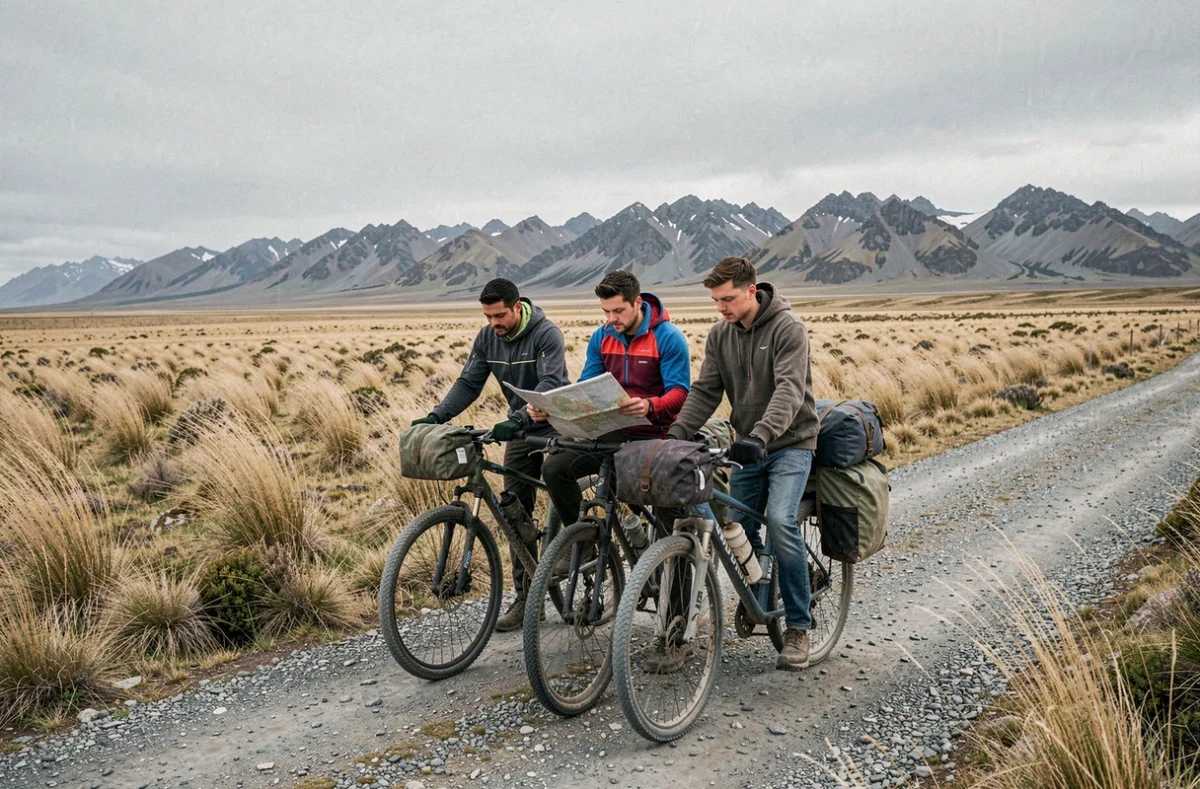
Cyclotourism is not reserved for athletes. We’re talking about covering between 40 and 80 kilometers a day, at a pace that allows for stopping, sleeping with locals or camping, and not depending on any schedule.
The bike eliminates the question of fuel and tickets. Once the equipment is purchased, the daily cost is reduced to food and accommodation. In France, bike routes like the Loire à Vélo or the Vélodyssée offer marked infrastructures. Abroad, logistics require more preparation, but countries like the Netherlands, Denmark, or Japan have very dense cycling networks.
Long-Distance Walking as a Mode of Transport in Its Own Right
The long-distance hiking trails (GR) in France and Europe transform walking into a true means of transport. You connect cities, cross regions, and pass through mountain passes. The GR20 in Corsica, the Camino de Santiago in Spain, or the Via Alpina across eight Alpine countries are routes where walking replaces all other transport for several days or weeks.
Walking imposes a radically different relationship with time. You cover about twenty kilometers a day, which forces you to accept slowness and observe what you are passing through.
Boat, Cargo, and Sailing: Crossing Oceans Without Flying
Taking a cargo ship to cross the Atlantic is still possible, but the availability of spots is limited, and crossings generally last about ten days. The price is not necessarily lower than a plane ticket, so the motivation is more about the choice of travel than saving money.
Hitchhiking on a sailboat (or co-sailing) operates on a different model. Platforms connect skippers looking for crew members with travelers willing to participate in maneuvers. This way, you can cross the Mediterranean, the Caribbean, or the Pacific while sharing the costs of port and food.
- Cargo crossings should be booked several months in advance through specialized agencies, with a very limited number of passenger cabins per ship
- Co-sailing requires some sailing knowledge or at least a good resistance to seasickness and the ability to live in confined spaces
- Each maritime crossing imposes flexibility on dates, as departures depend on weather and occupancy
Air transport, on the other hand, is subject to new obligations. In 2025, the first year of application of the ReFuelEU Aviation regulation, the share of sustainable aviation fuel supplied in the European Union exceeded the mandatory threshold. The supply was distributed in more airports than in 2024, but SAF remains a developing substitute that does not eliminate emissions.
Choosing your mode of transport is choosing your journey. A bus ride in Bolivia, a night on a train between two European capitals, or a crossing on a sailboat do not just lead to a destination: they constitute the experience itself. Transport is not a dead time between two places; it is the journey.